


It’s not like me to be violent. (I know, strong opening, eh?) But hearing the words, “The nights are drawing in…” unsolicited from a complete stranger required all my inner strength and newfound acceptance of difficult situations not to biff him on the nose.
I am not fond of this time of year. I do not enjoy the earlier evenings. I am not about to cosy up to a fire sporting Nordic socks. I am not overjoyed by perfect pumpkins on Instagram… Autumnal walks and thick sweaters… Oh, and I positively loathe the emergence of Christmas before meteorological summer is even over! Can we at least get sodding Halloween (the Mother of all non-holidays) out of the way first?
Forgive my little rant. Deep down, the onset of autumn reminds me of painful times when that filthy, flea-ridden black dog (called depression) would arrive, squat rent-free in my head, fill it with garbage, then refuse to bugger off until spring. Thankfully, those days are (mostly) behind me.
This might all come across as a miserable and grumpy old newsletter, but it is not.
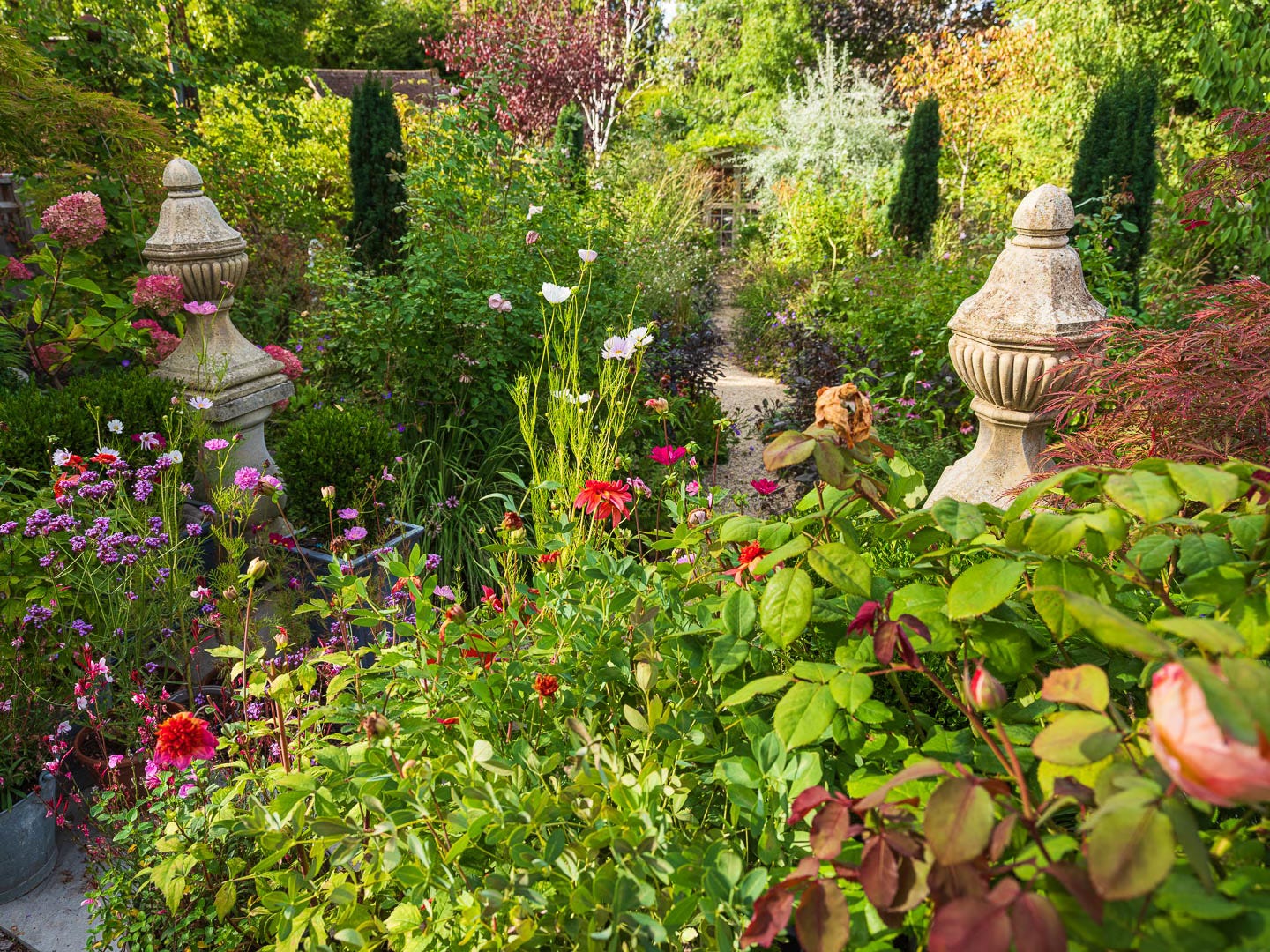
You may be wearied by the summer onslaught, but I’m here to tell you that there are literally months of (far more) enjoyable gardening ahead! Don’t be fooled by the socials. Or deceptively lured into cosseting images of the indoors.
Influencers are so utterly desperate to be the first into a new season, seemingly happy to sacrifice the right here and now. Seize the time you have and hold on to it. There will be weeks, if not months, of miserable winter weather ahead in which you can hide indoors.
Enjoy the garden time while it lasts!
I’ll be gardening right through to November and beyond.
The gardener returns
This garden needs me again. Me, the gardener. Not just any old random bloke-with-hose. And that is a truly wonderful feeling.
The garden has battled through the hottest, driest summer in my living memory. There have been failures, but also so many valuable lessons and surprising wins. I am needed again as the garden sounds a whopping great sigh of relief, with cooler days and periods of refreshing, invigorating, life-giving rain.
I have never been so glad to hear the pitter-patter of raindrops on the windows.
I honestly could have wept with relief.
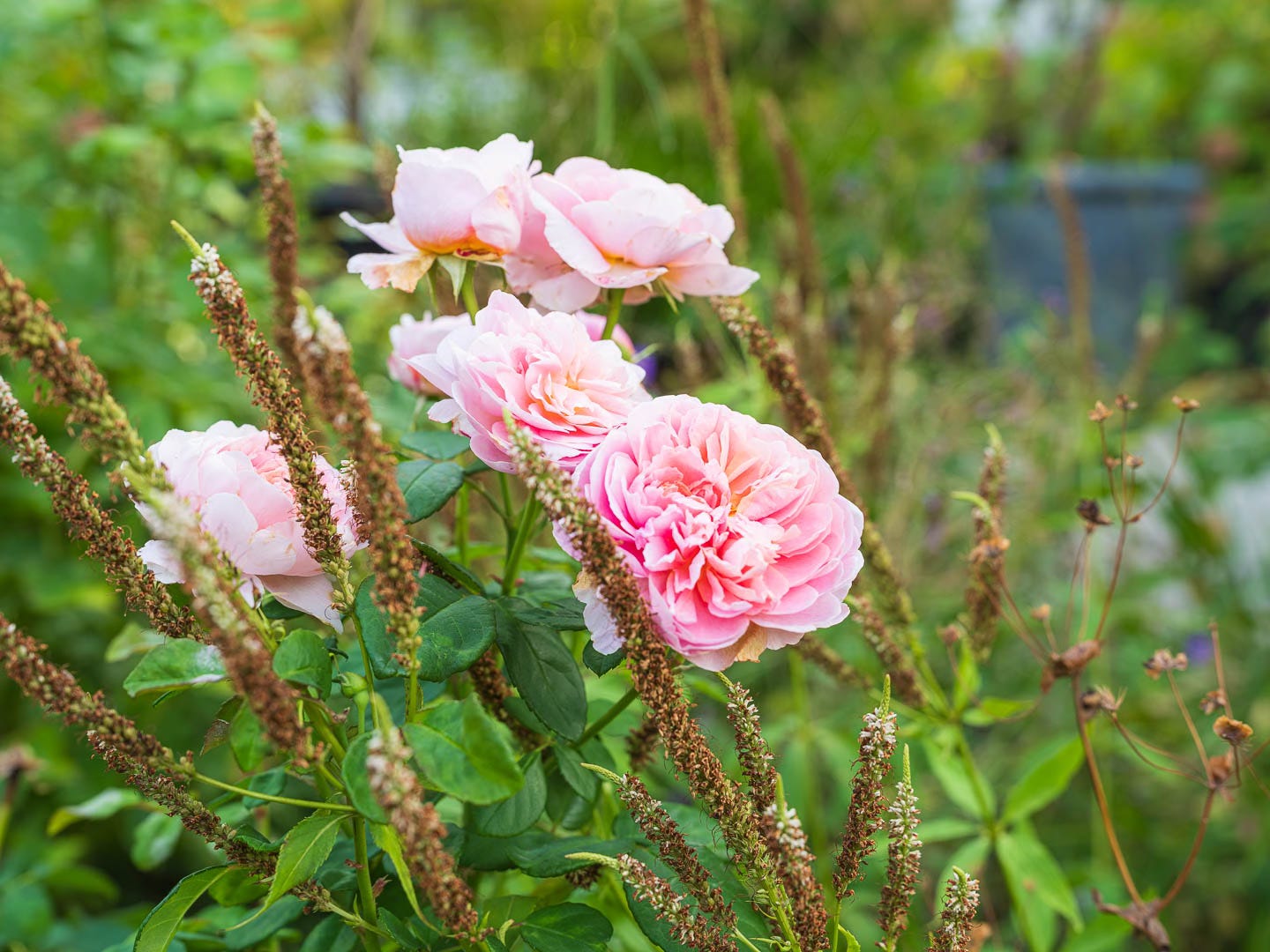
Many plants shut down during drought, diverting their resources towards roots and survival. With just a few days of steady showers, they are reawakening. Long-closed rosebuds have burst. Blooms have unfurled. Echinacea flower buds are swelling. Salvias are thrusting up new flower spikes. New leaves are shooting everywhere. And the grass is growing and green once again.
So, to aid recovery and give everything a little boost, container-grown plants have been given a healthy dose of liquid seaweed. Roses received a spray of Uncle Tom’s. Flowering plants have been deadheaded and supports checked. The yew hedges and topiary have been lightly trimmed, the ground beneath dusted with fish, blood and bonemeal, and watered liberally…
Ahem! With a watering can, of course.
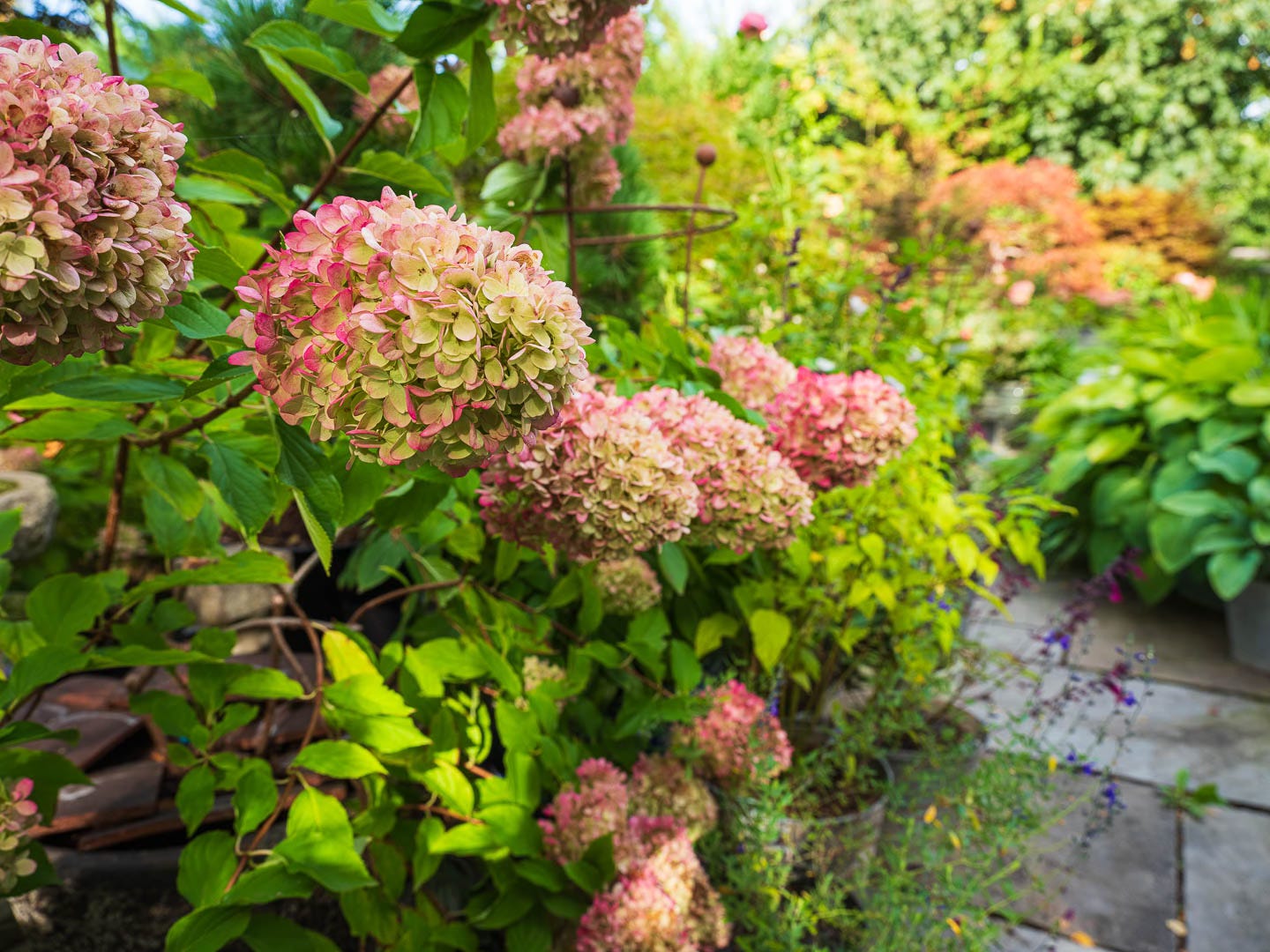
Speaking of which… I am struggling to believe that watering cans actually save water compared with the proper use of a hose. The amount of water sloshed on the ground. Accidentally spilled over leaves and pot rims (and gardeners’ feet). The lack of flow control without risking a sprained wrist?
All this compared with the trigger, flow control and precision of a lance. Aimed at the roots with a slow flow. Switched off when moving from pot to pot. The only water-saving I can see is that the gardener is simply too knackered from carrying cans to persevere for longer than half an hour.
May the paving enjoy the copious spillage.
Anyway, I don’t know why I am moaning exactly. Almost all my containers are now on a Gardena Micro-Drip irrigation system. I was originally gifted one Gardena Terrace kit in exchange for content. It was so good, I bought two more! If you’d like to know more about that, leave a comment below. I’d like to say it’s all connected to the waterbutts, but they ran dry months ago!
Right, where were we?
Oh yes, late summer and early autumn gardening.
Deadheading, feeding, watering, supporting, planting new plants, trimming and mowing, and removing the dead stuff all help give the tired garden a new lease of life. Not to mention the enormously gratifying feeling that we hobby gardeners can actually feel productive again and all without smothering our limbs in factor one million sunblock.
Clearing the decks
I’ve been working my way through the gardens.
In the Flower Garden, we lost a spindle tree, dogwoods, persicarias, helianthus and more. These have all been cut down and cleared away. Stems and branches were set aside, then given a thorough shake (to dislodge any hiding bugs) before being passed through the chipper. I now have just the stumps to remove.
The cuttings and prunings are all so dry, I’ve actually had to water the compost heaps, giving all new additions a sprinkle with a watering can. The summer piles haven’t sunk at all.
Who’d have believed it?!
Just by removing the dead stuff, I felt a new wave of admiration for the plants that have survived, but also an energising and positive shift in mindset. I was no longer looking at crispy leaves, withered stems, death and decay every day.
Instead, I’m looking at the large gaps left behind and wonderful images fill my mind. New planting combinations. Propagation. New plants…
Plant shopping!!!
It’s going to be a busy autumn.
I walked through all the gardens, dictating into my phone all the ideas and changes that need to happen. I’ve just popped back in now from adding a few more. It’s a long list! But I feel excited about it.
For six years, the Flower Garden has grown and sprawled and evolved. Plug plants have grown into monsters. Neighbours are in combat mode. Thugs are running rampant. Plants have been shoehorned into gaps that weren’t really gaps at all. Weaker plants have been swallowed whole.
The result?
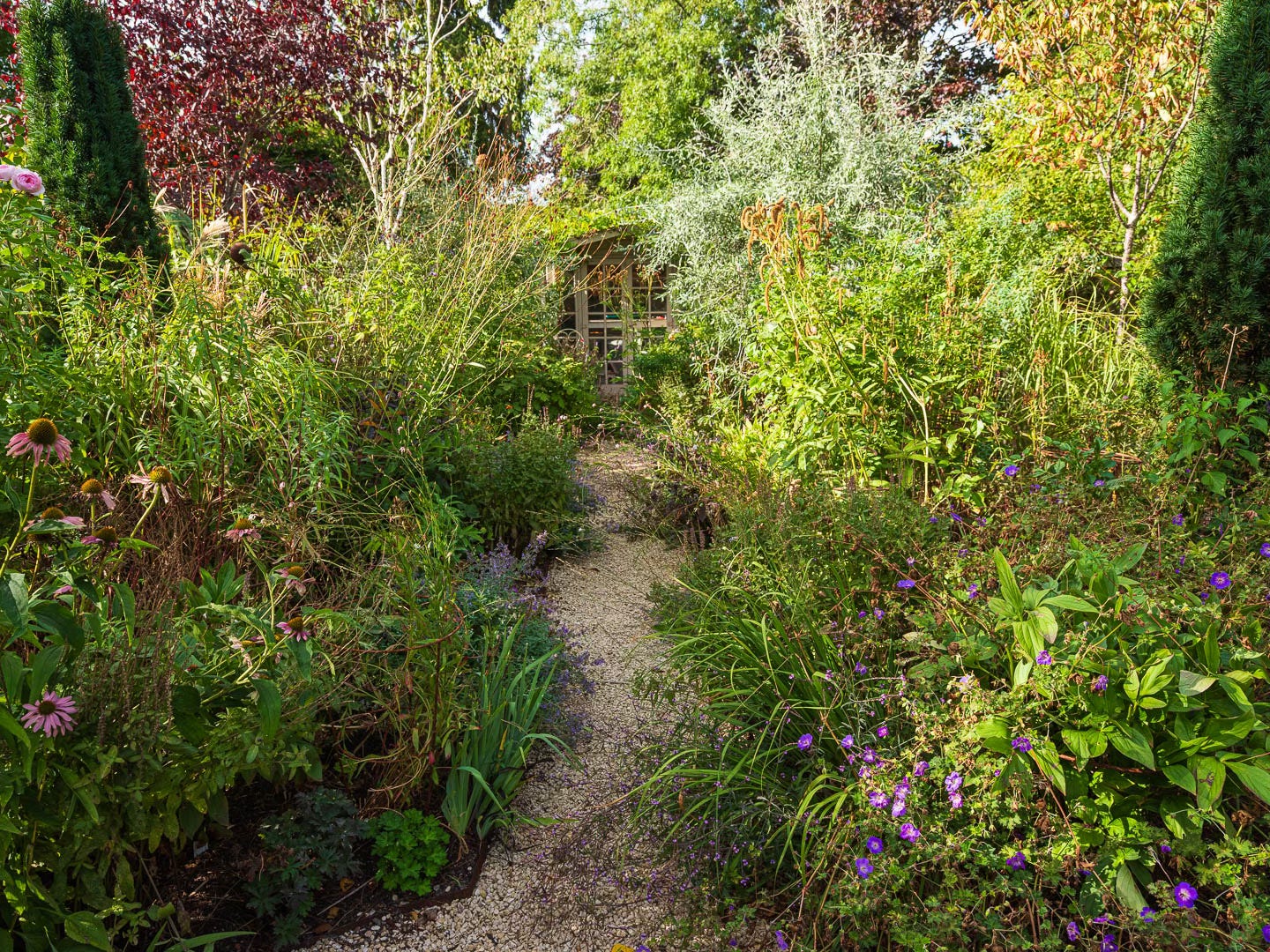
Rhythm and structure have become muddied and smudged. Frankly, it’s a bit of a mess, romantic and chaotic though it may be.
There are clearly strong plants that really love the garden. But others, even though they were bought on the back of thorough research, have really struggled. There’s also a lot of blue! Mostly geraniums! With very few counter punches of colour. Without bright pinks, oranges, even pale yellow, the overall effect is rather tired and drab.
It’s time to reintroduce more colour, more contrast, a little order and harking back to an earlier newsletter, I’ll be planting more of what thrives! While also trialling a few drought-resistant specialists, obviously.
Next summer, this Flower Garden will look markedly different.
What happens when a shady garden loses its shade?
The dry, shady and sharply drained Cottage Garden may not be very shady for much longer. The drought has killed a number of plants, including a Viburnum tinus and a previously voluptuous row of Hydrangea ‘Annabelle’, all reduced to bare stems and crispy leaves, dangling feebly in the breeze.
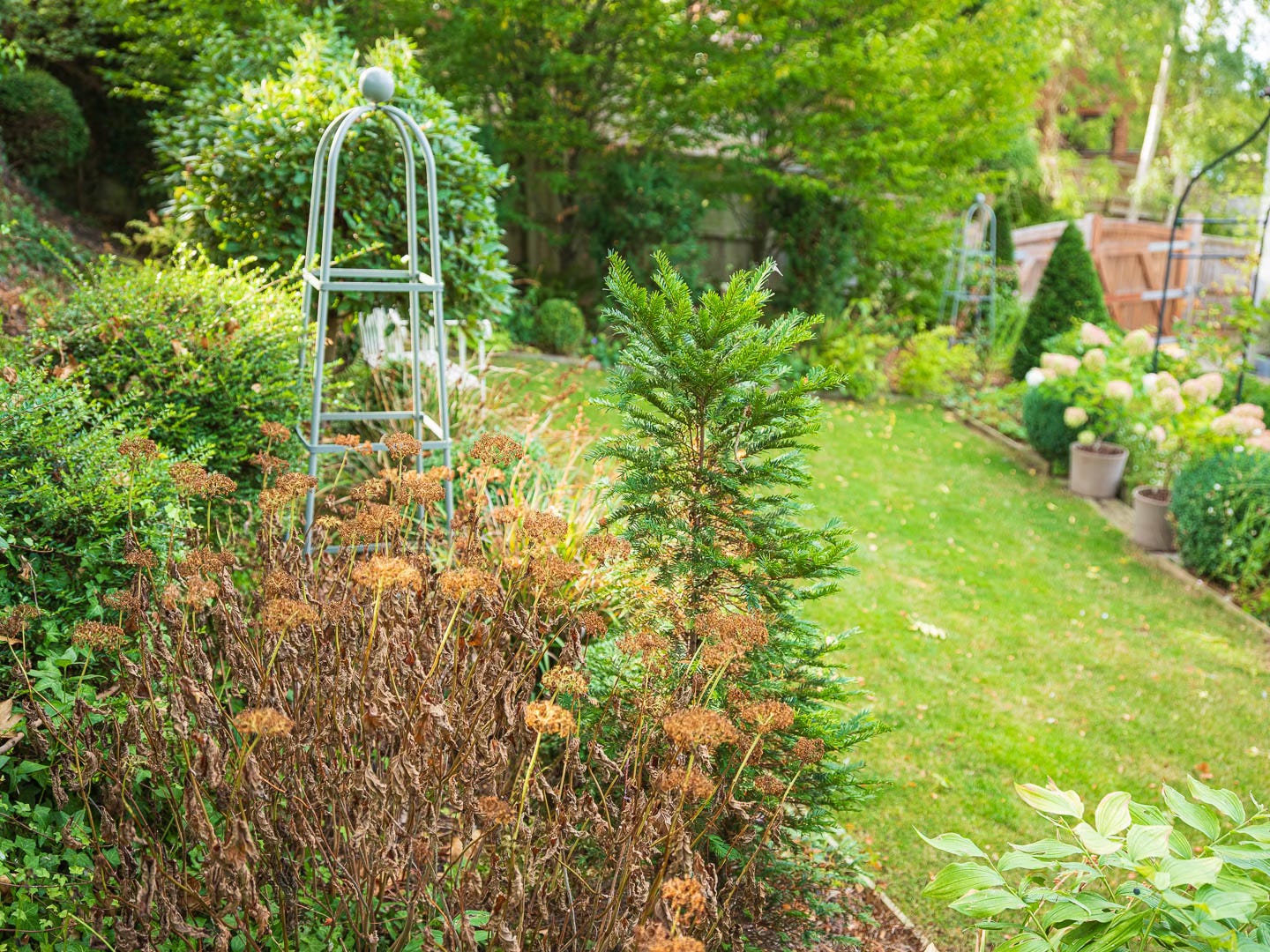
Crucially, the drought has also killed the silver birch perched on the steep bank. The tall, central, ivy-clad ash, responsible for almost all the shade, has grown weaker and weaker over the years and is now positively threadbare. It may be ash dieback. So, it looks like both ash and birch will be taken down this autumn.
(It’s always a sad business, taking down a mature tree. Although I’ll have plenty of firewood and material for plant supports! Every cloud!)
This will leave the mighty pollarded ash in the far left corner and a row of soon-to-be-pruned hornbeams on the right. In turn, the tree removals will open up a huge swathe of sun and sky.
The troublesome issue of the ‘dry garden’ becomes far less troublesome once you have the sunlight! It’s the tricky combination of dry and shady that has always limited the range of suitable plants. Once two mature trees are removed, I imagine there will also be considerably more moisture left in the soil.
A very welcome bonus!
Dry, sunny and well-drained conditions throw open a vast catalogue of Mediterranean plants: salvias, gaura, verbena, lavender, perovskia, Artemisia, euphorbia, achillea, nepeta, pennisetum and baptisia, to name just a few.
[Foot tapping madly as my mind fills with plants and potential.]
There will still be shade under the yew hedge and remaining ash, but with more light in the late afternoon. The hornbeams will be bathed in morning sunshine before casting their dappled shade from midday. All the existing shade lovers can be moved into these safe zones.
Meanwhile, the inbetweeners, those part-shade, part-sun plants leaning and craning, so desperate for more light that they’re growing out towards the white walls of the cottage, should all be far happier.
But what to do with those plants that simply cannot hack the drier conditions? The astrantias, sanguisorbas, bistorts, hydrangeas and Japanese anemones?
There will certainly be tough decisions ahead. For now, many will be lifted and potted up or moved to a nursery bed to overwinter in richer moisture-retentive soil. Maybe they’ll make useful additions to the Terrace or Courtyard container gardens? Maybe anyone passing the garden gate will be able to grab a free plant.
Too early to tell, so don’t pitch up just yet.
There are substantial clumps of Libertia grandiflora that need dividing and rejuvenating. It’s a plant that has always performed remarkably well in shade, with graceful evergreen, grassy foliage and small white blooms dancing above on fine stems.
I remember watching John Lord’s fervent support for libertia as a valuable shade plant. I think I’ll use it as a matrix plant across the borders, along with Alchemilla mollis, that tough old stalwart, and Silene fimbriata, the fringed-flowered campion. It’s currently spreading far and wide and seems particularly happy here!
In the shadier spots, brunnera, ferns, Polygonatum (Solomon’s seal), Digitalis lutea (straw foxglove) and epimediums have all fared well. Geranium nodosum is a great filler for tough shady spots and self-seeds rather freely. Geranium macrorrhizum, big-root cranesbill, has also always done very well.
It’s time to use these battle-hardened, ever-dependable plants more widely.
What about all the hydrangeas?
Oh, those poor Annabelles!
They are a sad and sorry-looking bunch of twigs right now. But there is life in there still, revealing fresh green when I scratch down to the cambium layer. For now, like the astrantias and other moisture lovers, they’ll be carefully lifted during dormancy, potted up and hopefully resuscitated by next season.
Cutting back a severely drought-stressed plant during the growing season can inadvertantly encourage a fresh flush of growth, when it would be better conserving its remaining reserves. So wield those pruners with caution! Only cut down what is truly dead. Unless you’re removing the plant entirely.
Interestingly, there are the beginnings of a plan for the Flower Garden involving the Annabelles.
Not in the borders. That would be utter madness.
However, right against the Terrace wall, under the shade of our specimen Japanese maples, there’s a cool, long space with dappled shade and, most notably…
Water.
I’ve been tinkering with the idea of large cattle troughs or raised beds spanning the distance between the steps and the boundary, potentially five metres long on either side. My initial thought was to fill these with hostas and ferns. I have so many hostas that need dividing, I’ll fill the troughs in no time.
If they’re deep enough, then the part-sun, dappled-shade site could suit the hydrangeas too. Especially when there will be no shortage of moisture! The run-off from the Terrace paving will be cunningly diverted and funnelled into the troughs.
They would also do a handsome job of hiding the ghastly, algae-slimed Terrace wall.
Hmmmm…
[Writer rubs his chin, deep in thought.]
Another area that needs a rethink is the Cottage Garden rose border, the front border that receives the most sun. Several roses are beginning to struggle in the dry soil, sucked dry by cherries, which have now been removed, and the long reach of the ash trees.
At the very edge, lining the retaining wall, is Hakonechloa macra, the Japanese forest grass. Over the years it has grown weaker and is now beginning to die out. The grass is mostly hidden by the rising yew hedge anyway and I am planning on removing it completely.
Not a job I’m looking forward to.
But this zone drains faster than a colander and the forest grass likes moisture, which is simply no longer there. If the plans to remove the ash and birch go ahead, this border will bask and bake. Any water will continue to disappear faster than you could fill a hole with a hose. Literally.
[Ahem!] Oh yes. Sorry. Watering can.
In place of the Hakonechloa, there’s now the potential for lavender, a compact form of nepeta or gaura, or small shrubby salvias such as Salvia × jamensis ‘Nachtvlinder’.
With the trees gone, the sun baking down, the slope, the drainage and the shallow soil, I could probably get away with a full-blown Mediterranean gravel garden!
The only fly in the ointment would be the seasonal shade.
If you’re not familiar with my garden, all you need to know is that I’m on the north face of the Wessex Downs. By November, the entire garden enters total shade and, just like the High Arctic, the sun won’t reappear until February.
So perhaps Provence will have to wait.
Wholesale disappointment
Stepping round to the Kitchen Garden, the picture is rather less encouraging.
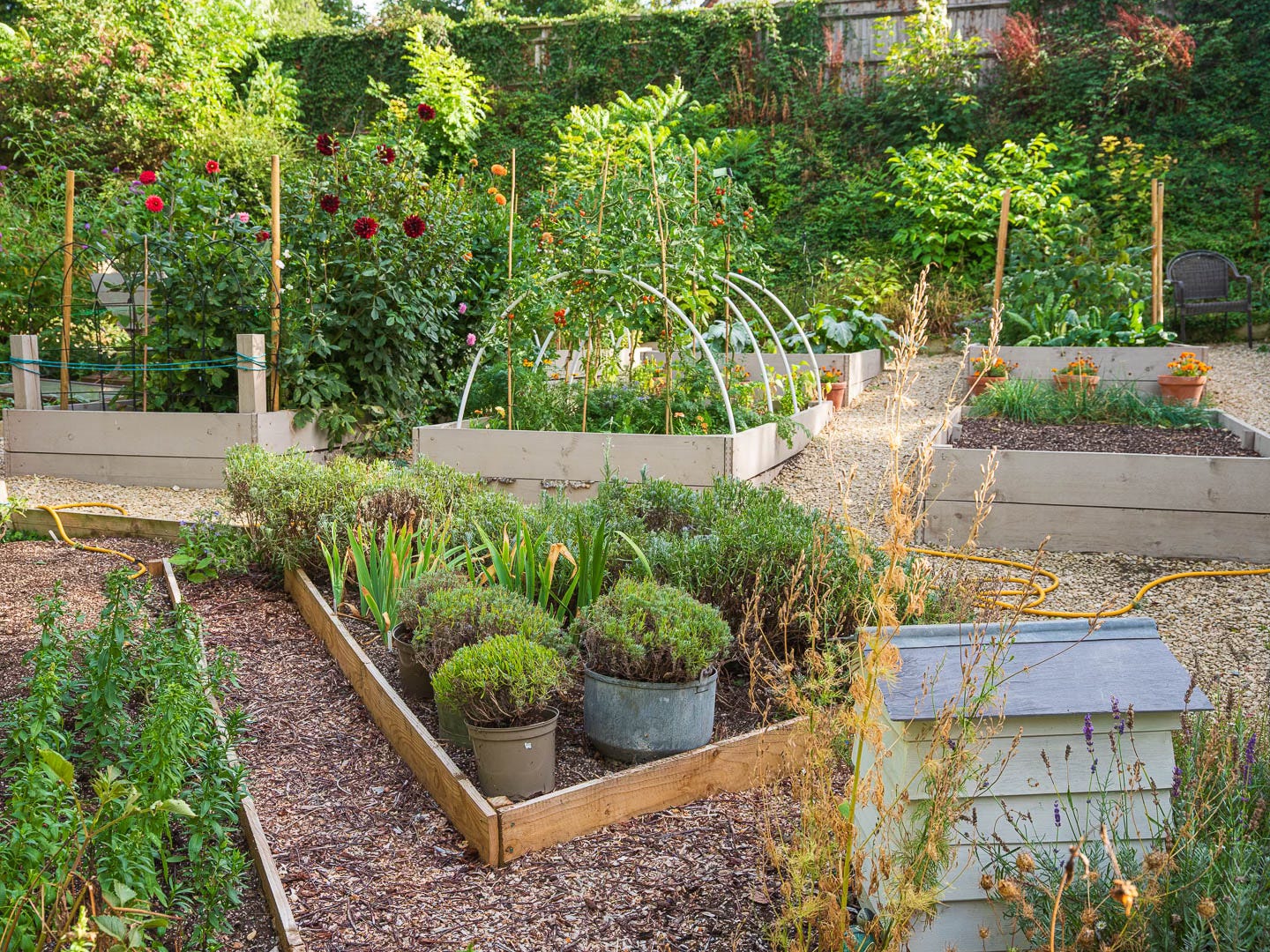
Except for the tomatoes, bowed by the sheer weight of fruits on the vine, the only other full bed is the dahlia cutting bed.
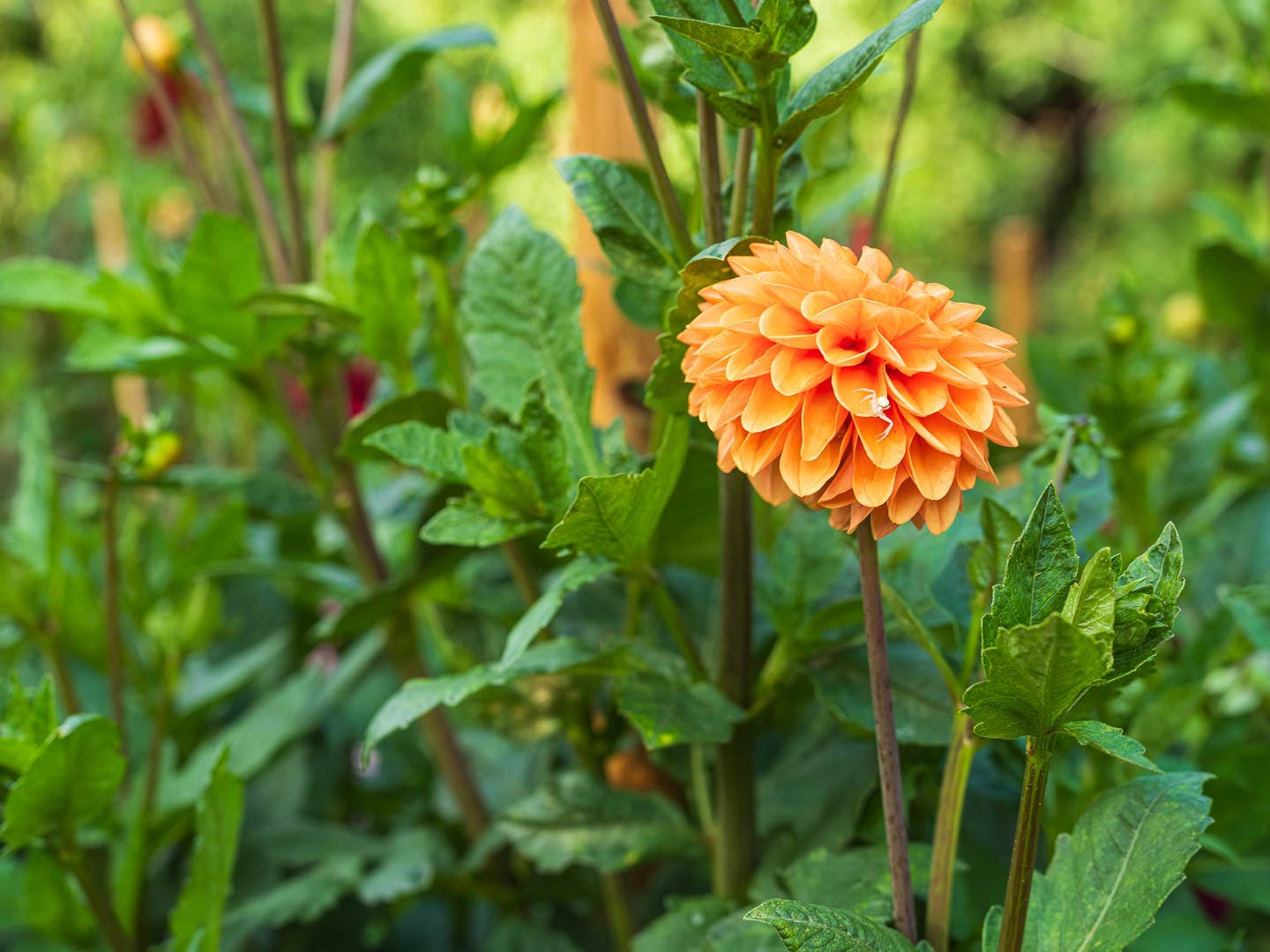
That has been a stonking success!
They’ve been blooming since the end of June and produced literally bucketloads of blooms every few days. The rest of the beds are bare and dusty. The compost-filled raised beds turned hydrophobic and watering the crops was a total pain in the proverbials.
Spraying the surface. Leaving it to soak. Spraying it again. Leaving it. Then watering repeatedly.
I guess, like many gardeners, I was simply fatigued by the weather. I rather lost my way with sowing seeds, and any seedlings instantly desiccated, withering in days, if not hours. If I have one glaring blind spot, it’s that second sowing in summer for autumn and winter harvests.
Every year I plan.
Every year I fail.
Still, at least the tomatoes were epic!
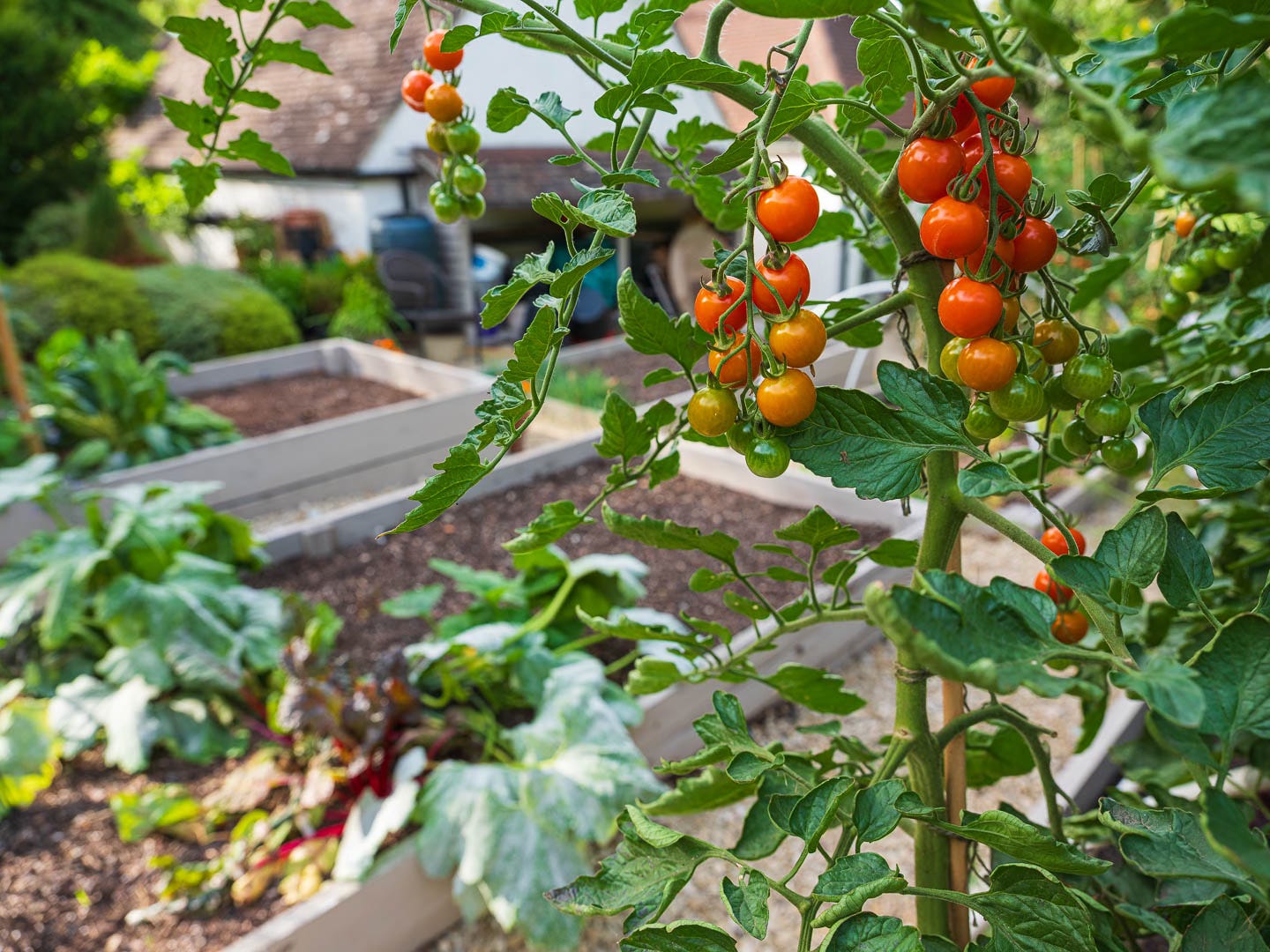
Yet here too, amongst the dust and mildewed leaves of the courgettes, are valuable lessons.
If summers like this are the new norm, I need to find a way of spending less time watering, freeing up my time and energies and hopefully reducing the fatigue. I also need to use water more efficiently and capture more rainwater from the roof.
With the successes in the container gardens, I’ve been encouraged to install irrigation in the veg beds too. It’ll be ready for next spring. One large-bore supply from the tap or waterbutts, branching off to drip lines running through each of the six raised beds.
The goal is to keep the beds adequately moist, not soaked.
Even if it’s manually operated, the thought of simply turning on a tap or switching on the waterbutt pump and walking away to do something else for an hour sounds positively luxurious.
I can be a gardener instead of that random bloke-with-hose.
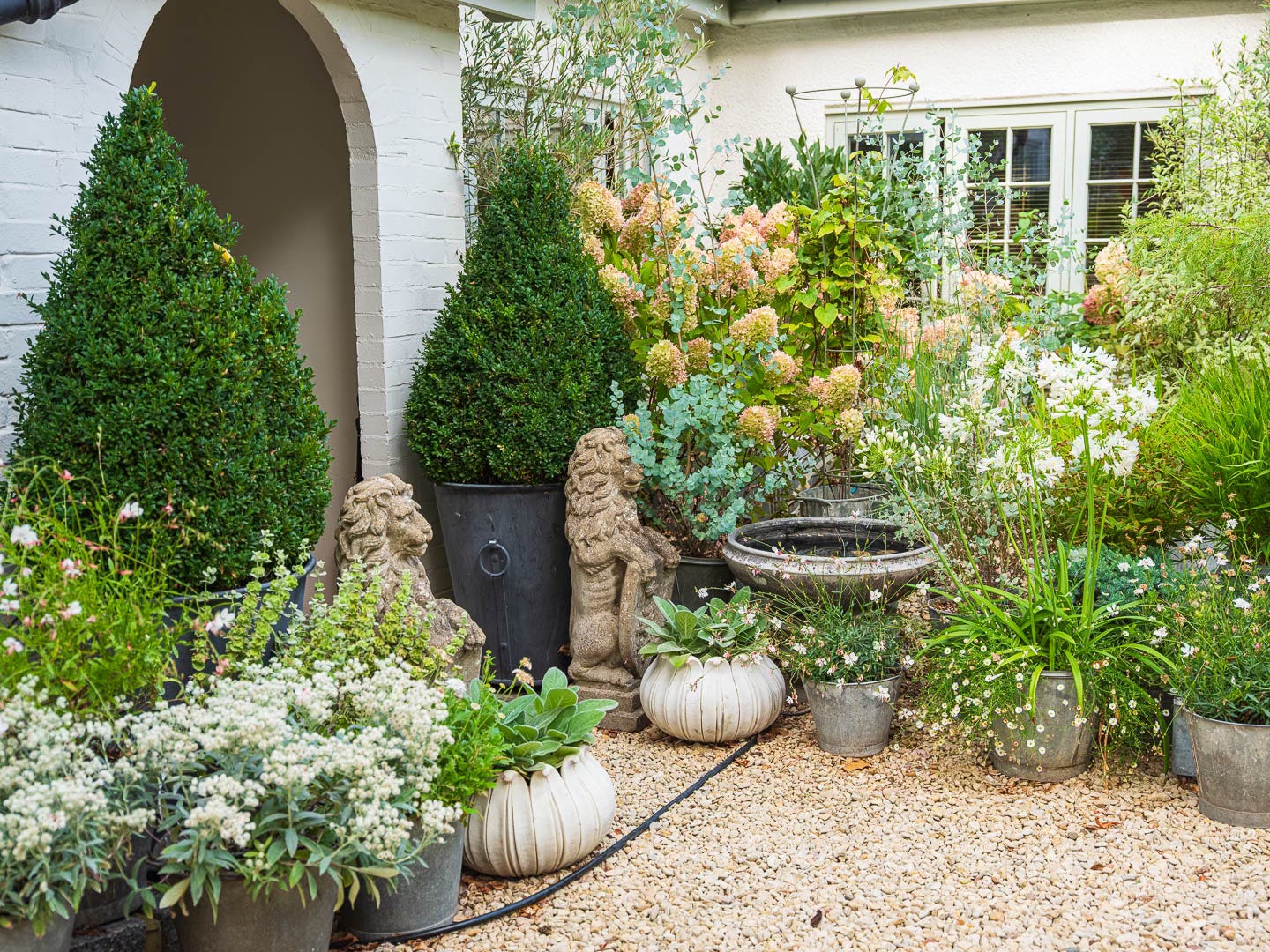
The very best thing about autumn
The pressure eases and you have time to take stock and assess. What worked? What didn’t? Which plants thrived? Which failed? What can you do better? What could make gardening just a little easier in scorching summers?
Is it time to invest in irrigation?
Is it time to order the mulch?
Then comes one of the most enjoyable tasks of all…
Planning for next season.
So, maybe I’ve been a little unfair to autumn.
I still don’t want your perfect pumpkins, Nordic socks or bloody Christmas decorations. And anyone telling me “the nights are drawing in” remains on very thin ice and should probably duck.
But give me a garden full of possibilities, a notebook full of plans and several months in which to put them into action, and perhaps there are worse times of year.
Just don’t mention the longer nights.
You are forgiven the little rant. Rant away on my behalf, I could not agree more! Personally I never think summer is over until the clocks change, but I do live below the South Downs. I love the ‘random bloke with hose’. Conjures up a picture. I absolutely agree with you about watering judiciously with a hose. Super article, thank you.
I’ve been working round my garden removing all traces of crispy foliage and the casualties of this summer. Like you I am now rather excited by the gaps that have opened up. I look forward to filling those spaces with (hopefully!) more suitable replacements. I would be very interested to learn more about the installation of an automatic drip irrigation system. Watering pots and raised beds became rather tedious this summer!