


As I type, winter is doing a very good job of reminding me that it’s not quite finished with us just yet. The thermometer has just plunged to 3°C, with a biting wind and hail. Brrrrr!!!! I’ve retreated inside and am taking the opportunity to write to you lovely gardeners instead.
My ever-increasing list of things to do in the garden can just wait. Besides, I have made lots of progress in the garden. I’ve been a very busy boy.
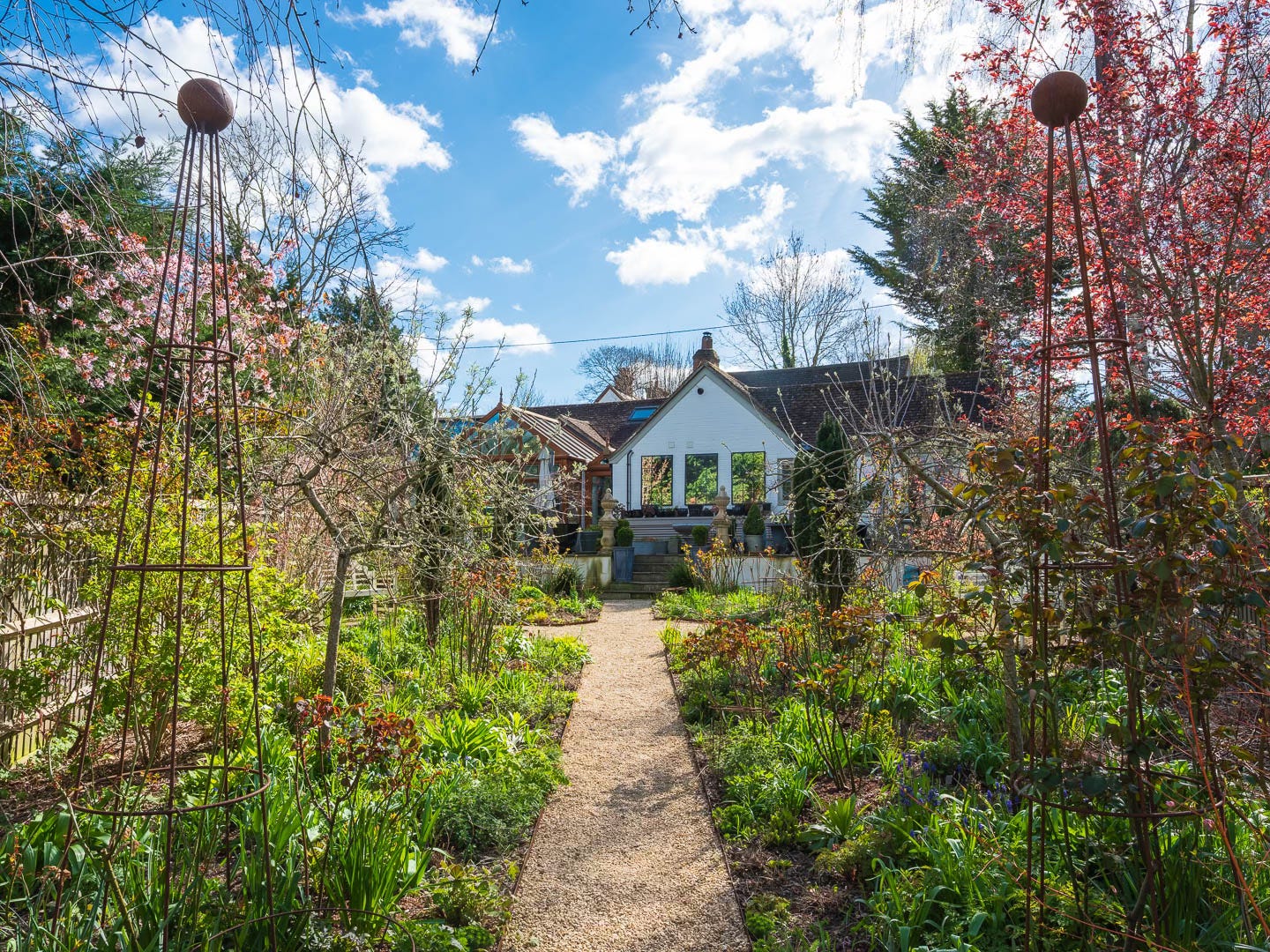
March in my patch
As the garden wakes from its soggy slumber, many gardeners are (timidly) dipping a muddy toe back into gardening. Others, myself included, are launching a full-on assault, revelling in the opportunity to do some proper, gutsy gardening at long last. Hoorah!
Admittedly, it helps that I garden on a hill and have lots of hard paths to work from. Not to mention the no-dig beds and borders that you can walk on, no matter what Old Man Winter throws at us.
However, that “not quite winter, not quite spring thing” is a tough time of year. We’re eager (desperate!) to get going, but the garden ponders, unsure whether it’s time to lurch into growth, or if it’s that dreaded false spring, with a sharp biting winter blast waiting just round the corner… like the one rattling my potting shed windows right now.
That’s the beauty and beast of March here in Blighty. Just like the old adage, in like a lion, out like a lamb. March can hit you with serenity or storms and sizzling afternoons after frost-bitten mornings. Complete chaos.


You may have to hunt high and low for the beauty, but it is most definitely there. Blossom above. Cherries, blackthorn (sloeberry), viburnums, and the early crab apples. For the rest, nature will compel you to kneel, demanding muddy knees for a bee’s-eye view of cyclamen, dainty violas, nodding hellebores, narcissus, muscari, hyacinths, and tulips.
Unless you thought ahead and placed your pots on a table. If you did, clever you!
“I must say, last year’s ivory ‘Purissima’ is putting up a good fight against the winter’s deluge. Thankfully they’re in the fastest-draining border in the entire garden.”
And there are more delights to broaden that smile. My acers’ leaf buds are bursting like firecrackers in vivid pinks, fiery reds, and luminous, zesty greens. Pulmonarias with their cool blend of opalescent whites, pinks, and blues. Brunnera ‘Jack Frost’ lighting up the dappled shade with its sparkling silvery variegation. I just love those forget-me-not flowers.
Enchanting the nostrils and lifting the spirits are the skimmias. A compact evergreen woodlander… and it loves shade. The heady perfume is quite exquisite too, luring in both gardener and bee alike.
Gardening options…
With the ground either frozen or flooded (or just downright soggy), what can we gardeners do? You could go back inside and relax. Another week or two makes little difference. But if you’re eager and sick of rain-induced cabin fever, then maybe my activities over the past couple of weeks will tempt you outside… So go grab your tools and don the gloves. Winter clothing hot water bottle optional.
Just do one thing…
I’ve often found that if you’re struggling to step over the threshold and into the garden, doing one quick and simple job can be the spark that ignites your entire gardening year. Make a list of things you’d like to do (including just sitting out there with a brew), and do the easiest and quickest ones first. Probably the sitting thing. With biscuits. Always with biscuits.
Pruning
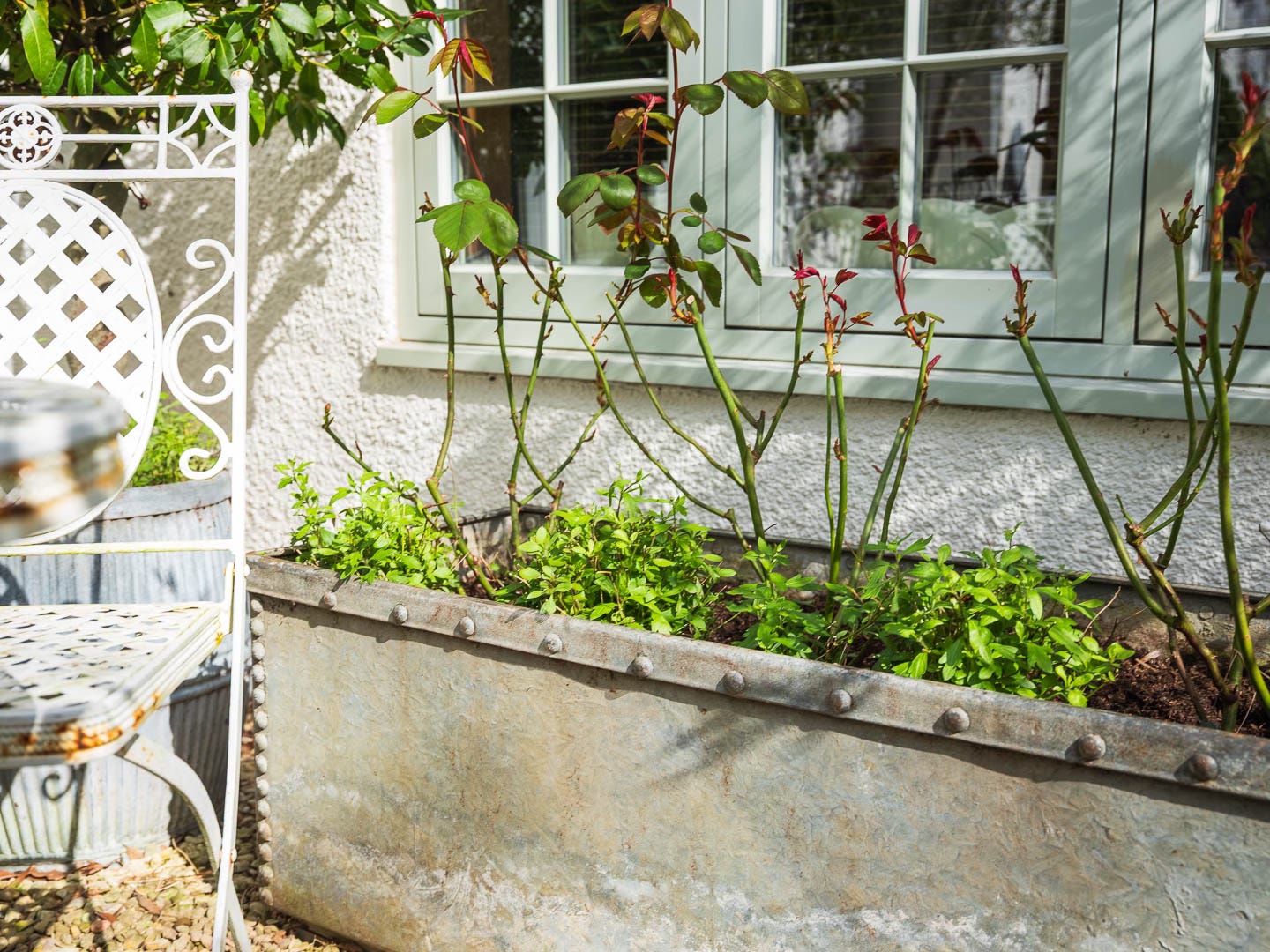
Nothing too strenuous. The roses and wisteria are done. I’m simply tidying up straggly erigeron and scabious, both battled hard through winter and are still trying to flower. You have to love these hardy stalwarts for their sheer willingness to grow and bloom. But they were both looking very straggly and brown.
A short back and sides. Quick and easy. For erigeron, grab a handful and chop it off. I take mine back to about a hands width, for tidiness. I found erigeron doesn’t large being scalped to the ground. A trim is enough to promote new growth lower down. It’ll be fresh green and bushy, laden with daisies again in just a few weeks. The scabious is cut right down, being careful not to cut off any fresh new shoots in the process.
Potting on, repotting
Some of my hastily potted hydrangeas (retrieved from the smothering jungle of the Flower Garden) have outgrown their temporary homes and are now upsizing to a more stylish, galvanised residence. Very posh.
Over the years, reflecting the ever more indulgent bulb displays, I’ve amassed dozens of gorgeous old zinc galvanised buckets and boiler pots. But I’m scaling back the spring show, freeing up a more buckets for long term planting. Mainly new homes for hakonechloa grasses, ferns, hydrangeas, salvias, and seasonal summer cosmos, etc.
“The need for seasonal exuberance has softened into an appreciation for permanence.”
Faffing
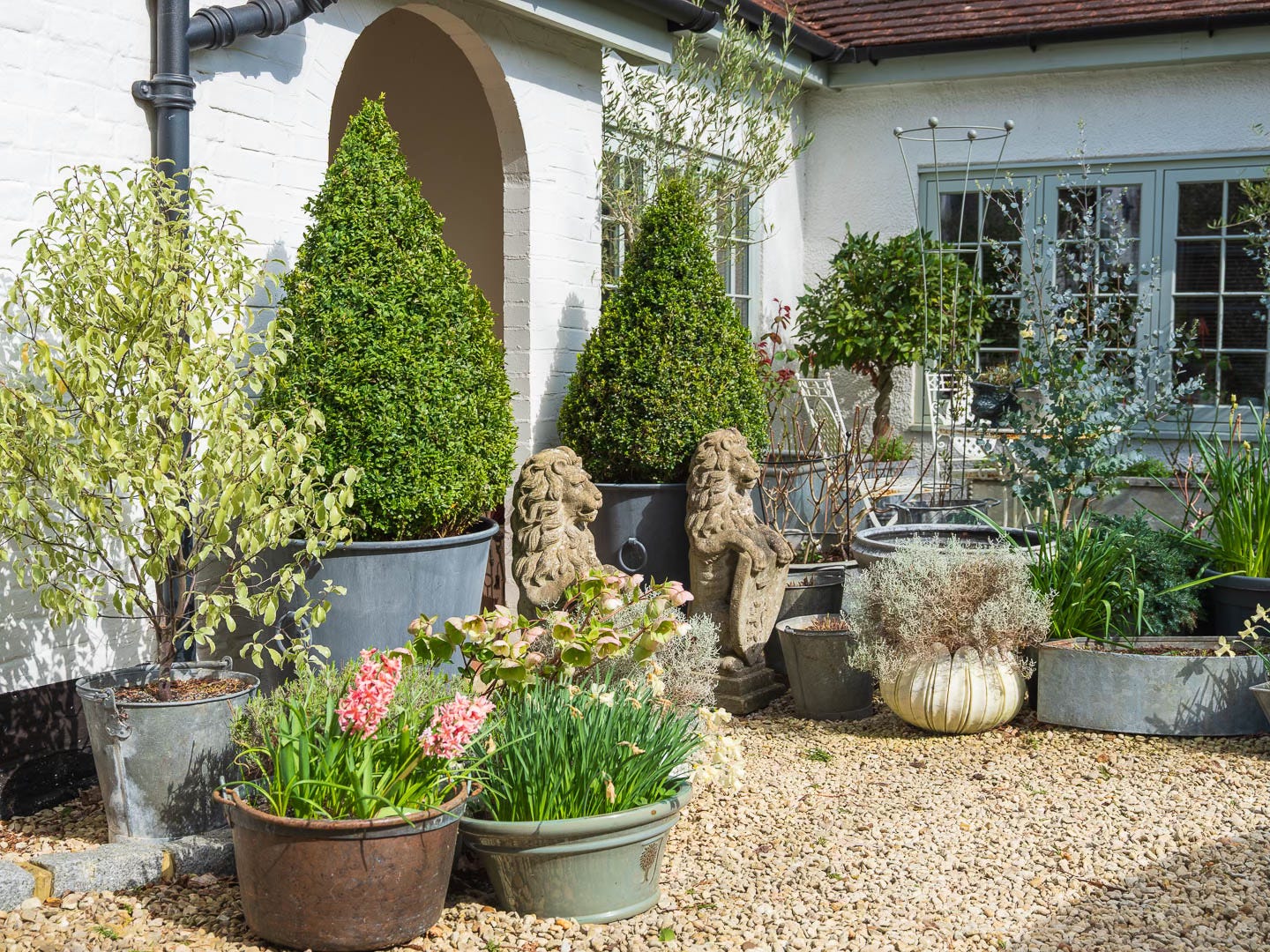
If you have a container display, like my Courtyard Garden, it’s probably ready for a sprucing up. Weeding out winter’s unwanted arrivals, deadheading (already, yes), rearranging the display as and when plants wax and wane.
Even though I have a main cast of players, the structural trees and shrubs, I do like to shuffle them around now and again to see how they interplay with the seasonal planting.
Moving, dividing
If I have congested or overgrown herbaceous planting, I’ve taken to lifting and dividing plants, then growing them on in containers, rather than needlessly pacing up and down the garden path, trying to find a gap in the border.
(Elliott, we’ve talked about this… There aren’t any. It is full!)
The new divisions spend a season as smaller plants adorning the terrace display, regularly watered and fussed over, where they can bulk up happily before being planted out in the wider garden. It gives them time to strengthen and stand their ground in a very competitive space.
(Honestly, it’s like dead man’s boots!)
Preparing raised beds
I have six raised beds in the Kitchen Garden, and over the past month they’ve been weeded, mulched, then raked repeatedly. The surface is now a wonderfully fine tilth. Treated with nematodes to combat slugs, planted with the first frost-hardy vegetables, and covered with horticultural fleece. All I need to do now is install the pea supports. More on that later.
Raised beds are great for an early start, draining well and warming quicker than ground soil. Especially useful if your soil is heavy and prone to waterlogging. Mine were originally filled with peat-free compost and are topped up each year with homemade garden compost. It’s easy gardening. The added bonus… no other feed or amendments required. Simples.
Turning compost
This will definitely warm you up and get that heart pumping. I have four 1.5m³ (2yd³) bays in total, and summer’s garden waste will fill two easily. Once they’ve both rotted down, I turn two into one and let it mature. Then, in winter, it’s spread out on the six veggie beds. Free goodness for wholesome organic veg.
Sowing seeds
Almost all of my first wave of veggie seedlings are now either planted out or potted on. The decks are clear for the next batch, which will include some flowers, tomatoes (for growing outdoors), chard, more salads, then the warmth-loving corn and cucurbits later in April.
For the flowers, I’ve sown: cosmos for containers and the Flower Garden borders; nasturtiums for the Kitchen Garden; Snapdragons for cutting and borders. I also have a carpet of nigella in the cutting garden which I’ll be lifting and transplanting around the entire garden. I LOVE nigella!
Cleaning water features (and bird baths)
Not a fun job, but essential. My water bowls and fountains have had a year of fallen leaves and bird poo, topped up by what feels like one billion birch seeds.
(The algae are having a party)
There’s no real shortcut. The water is bailed out, decorative cobbles plunged into a trug of diluted bleach, then a good scraping, scrub, rinse, and refill. It helps to do it on a sunny day so the task isn’t entirely miserable. A good podcast or playlist definitely helps.
Just out of interest, I’ve been sent a few copper plates (by Mellbree) to submerge in the water. Apparently they control the algae. I’ll report back.
Topping and redressing
Checking over pots for weeds and other unwanted visitors. Especially hostas. Slugs and snails love to overwinter under pots and up inside drainage holes. Clever blighters.
I’m halfway through redressing all my containers. After scraping away the old surface layer, I give them a dusting of fertiliser and a fresh layer of compost on top.
This year, I’ve also mulched the containerised trees and shrubs with Sylvagrow’s Mini Pine Chips. A very pleasant and easy product to work with, locking in moisture and slowly breaking down to add goodness along the way. They smarten up the pots a treat and it smells good!
(Horticultural grit has officially been retired. Sorry, old friend. You’ve been a true and faithful servant)
Watering pots
Even after months of incessant rain, potted plants can still be bone dry. While I was redressing, I went around and lifted the (smaller) pots and many were incredibly light (in weight) and in desperate need of a drink. Remarkable really.
Also, don’t forget your spring bulbs! They’ll need regular water once in leaf. Any containerised evergreens will have been drinking all winter. They’ll definitely be thirsty now that temperatures and daylight hours are ramping up.
Planting SOS
In a very quiet courtyard, one that I rarely show, stands a vast galvanised water tank. It’s home to a splendid Viburnum tinus ‘Eve Price’, clipped into a large shaggy lollipop. Underplanted with erigeron on the sunny side and skimmias on the shady side.
At first, all was well. Until the erigeron decided it was exceptionally happy there. In the end, it was all erigeron, cascading over the planter like a wave, and the skimmias were completely overrun. I thought they had died off, but after a bit of a rummage I found them, buried.
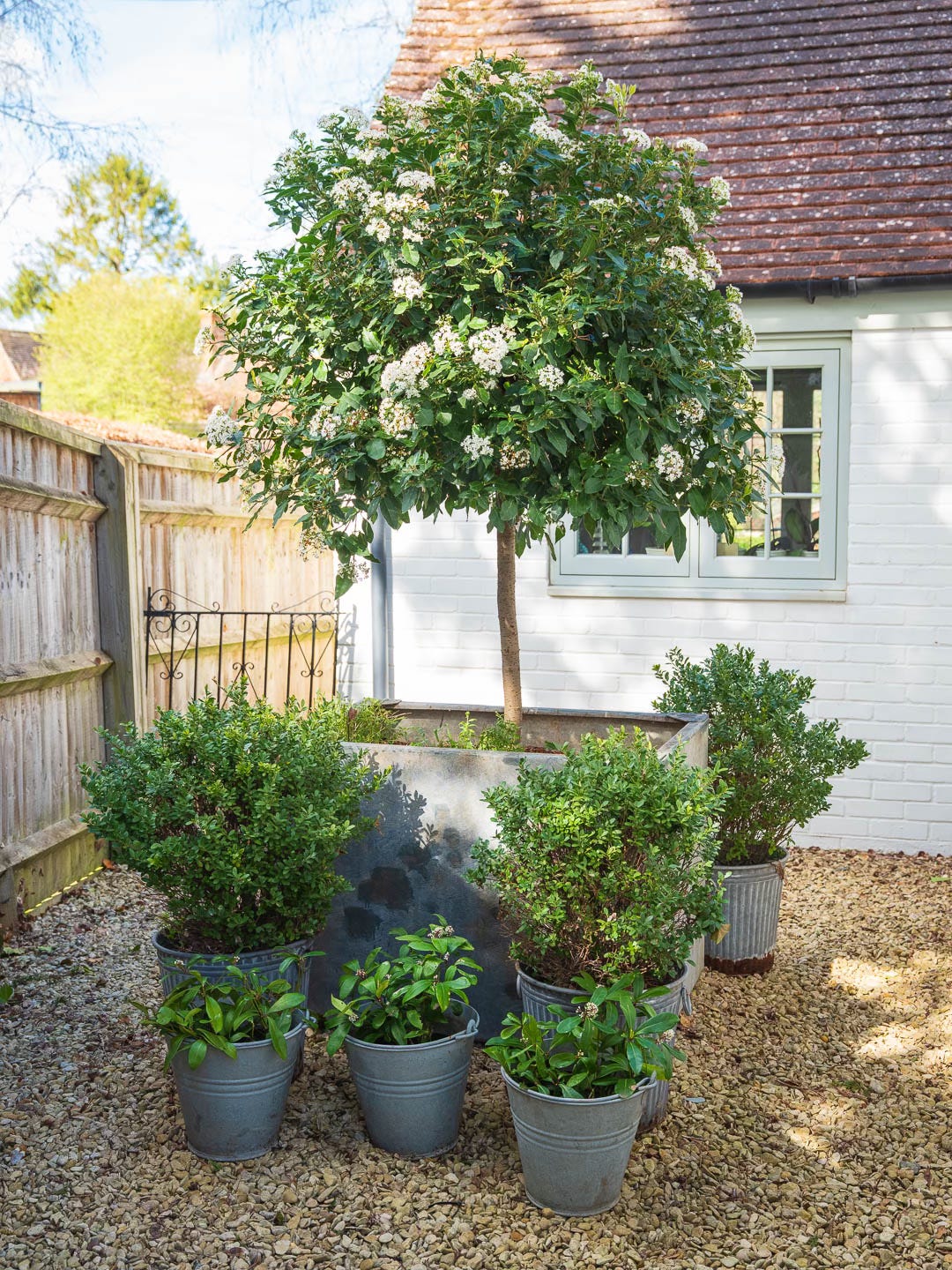
One had rotted away, but the other three (yes, it is a very large container) were still alive, just quietly struggling. So, I whipped them out, repotted them individually, watered them thoroughly, and placed them on the ground around the planter, keeping the Ilex crenata balls company.
The erigeron was hacked back, but is now free to roam and cascade wherever it wishes. Frankly, it was going to anyway.
Fruitful expansion
This year, I’m growing fruit for the very first time. I know. I know. I should have been anyway. It’s been on the cards for years. I did grow strawberries once, seemingly all for the local rodent population, but I’m hoping these might actually make it to the kitchen.
I’ve invested in some autumn raspberry canes, bare-root, which are wonderfully straightforward. Cut them down each spring and enjoy fat, juicy raspberries later in the summer. That’s the theory, anyway.
I hadn’t really given much thought to their eventual size (hard to imagine when you’re planting a twig), but after watching Monty Don build his raspberry supports recently, it dawned on me that these could become rather large, top-heavy beasts.
So, I copied The Don. Hammered in some sturdy stakes, ran galvanised wire between them, added tensioners to keep everything taut. A very satisfying little job, and a nice way to welcome the first proper fruit crops into the Kitchen Garden.
Speaking of fruity things, my rhubarb is looking the best ever and I’m itching to twist off the first stems. But how best to enjoy them? Stewed for Greek yoghurt… or hot, in a crumble with custard? Mmmmmmmm…
It has to be crumble, doesn’t it. Then any leftovers can be quietly repurposed for breakfast the next day. Marvellous!
A brief rant about pea netting
Staying in the Kitchen Garden, I’ve decided to buy plastic pea netting this year. I know this may trigger some. And I get it. I hate adding plastic. I recycle where I can, buy sustainably where I can. But (and it’s a big but), I have tried the jute twine netting repeatedly and, quite frankly, it’s rubbish.
There. I said it.
It stretches, it gapes, it sags, and it snaps. I’ve tried it for three seasons now, and every time I’ve ended up with collapsing peas or sideways dahlias. Sorry. I don’t enjoy being a naysayer, but the jute just isn’t up to the job. I probably had more reliable support when I was weaving my own cat’s cradle through metal supports.
Can you recommend a brand or supplier of good strong jute netting?
Lessons learned (the hard way, obviously)
Speaking of supports, my cheap metal arches have finally rusted through and collapsed in spectacular fashion. The screws have rusted as well, so I couldn’t dismantle them properly. In the end, I just snapped the bars apart, which tells you everything you need to know about their structural integrity.
A lesson learned. Buy cheap, buy twice.
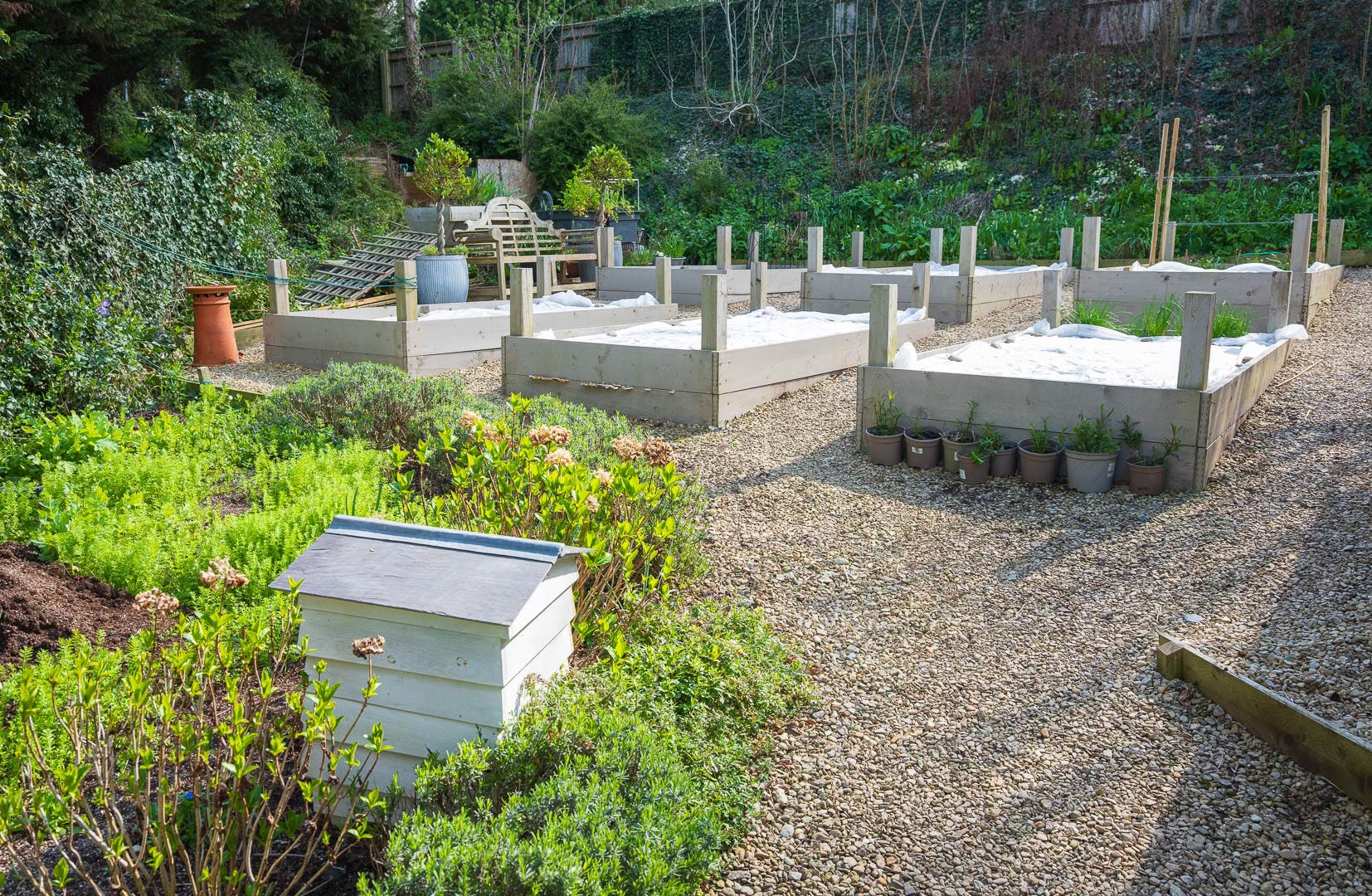
Oddly though, removing the three arches has made the Kitchen Garden feel so much bigger. More open, more expansive. One of those accidental improvements you didn’t know you needed.
We’re almost there…
So, yes, occasionally it may still feel like winter is clinging on, rattling windows and testing our patience, but the garden is stirring. Quietly, cautiously… but undeniably. The fresh green growth is emerging. Insects are on the wing. The blossom is in the trees…
And whether you’re tiptoeing out with a trowel or charging in like a muddy whirlwind, the season has begun. Even if it starts with just one little job… and a well-earned cup of tea afterwards.
And biscuits. Remember the biscuits.
Your fellow flower fancier,
Elliott 🌸
Love all the garden photos 💚. It’s still wintery in my neck of the woods in Canada, but April is around the corner!
Definitely the crumble. I mix rhubarb and blueberries 🫐 50/50 for better flavor, texture, and color. A scoop of vanilla ice cream on the side makes it a high-protein breakfast for extended gardening energy.